






Argentinian Lake District
With shimmering lakes, jagged peaks with hiking trails, white water rafting, kayaking and mountain biking, the Argentinian Lake District is an outdoor paradise.
Discover More
Patagonia is often called the ‘Southern Cone’ – the long stretch of land where the bottom of South America slowly tapers to a close, pointing like a finger from the island of Tierra del Fuego to the tip of the Antarctic Peninsula. Patagonia is split between Argentina and Chile. Argentinian Patagonia stretches around 1600km (1000 miles) in length, meeting the Atlantic Ocean on its east coast and the Andes Mountains (and Chile) to the west. Argentinian Patagonia consists of the provinces of Neuquén, Río Negro, Chubut, Santa Cruz and Tierra del Fuego.
For travellers, Argentinian Patagonia can be broken down into four main areas of interest. At the heart of these is Los Glaciares National Park, a hiking, trekking and adventure travel paradise that’s home to wild landscapes such as the Fitz Roy mountain range, the Southern Patagonian Ice Field and the iconic Perito Moreno Glacier.
North of this is the Argentinian Lake District. Centred on Bariloche and home to the country’s oldest national parks, it’s a place dotted with thick forests, deep blue lakes, extinct volcanoes and the granite spires of the Cerro Catedral Massif – a region to explore on foot, kayak and mountain bike.
To the south is Tierra del Fuego. Argentina’s gateway for Antarctic cruises thanks to its port city of Ushuaia, its glacier-clad coastline is just as rewarding to explore on an adventure cruise through the Beagle Channel, while its remote and barely-there hiking trails remain one of the great wild frontiers for hikers.
Between these, on the Atlantic Coast is Peninsula Valdés.This is the home to Argentina’s best wildlife safaris, where penguins line the beaches and Southern right whales and orcas cruise close to the shoreline, as well as the cultural traditions of Welsh Patagonia, handed down from the first generations of European immigrants.
When planning a trip to Patagonia, the first question is whether to head for Argentina or Chile.
Is it better to hike Patagonia in Argentina or Chile? Both offer fantastic day hikes and remote treks, including the classic Huemul Circuit, plus Patagonia's most iconic and accessible glacier: Perito Moreno. For the W Trek you'll need to cross the border to Chilean Patagonia.
Of course, it's also possible to visit both – and many of our Swoop Group Tours do exactly that. Easy border crossings allow you to combine Los Glaciares and Torres del Paine or the Argentinian and Chilean Lake Districts.
Our experts know both sides of the border like the back of the hands: talk to us to discover which option is best to match your Patagonia dreams.
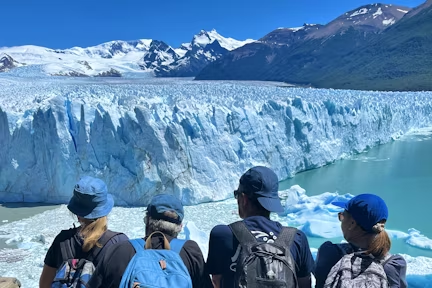
Perito Moreno Glacier in Los Glaciares National Park
One of the easiest ways to explore Argentinian Patagonia is on one of Swoop's escorted small group tours. We’ve used our years of experience to create a unique collection of carefully tailored itineraries centred on Los Glaciares National Park.
Every departure has a maximum of 16 guests to give the best group dynamics. You'll be accompanied by an English-speaking Tour Leader, who'll share their knowledge and passion for their Patagonian home while looking after all the travel arrangements.
Whether you want an active adventure or to travel in relaxed comfort, our groups tours offer you the chance to experience Patagonia up close and to make lasting connections with both the region and your fellow travellers.

Los Glaciares National Park is Argentinian Patagonia’s most popular destination with travellers.
Its biggest draw is the mind-boggling Perito Moreno Glacier, which can be explored in any number of ways from ice-hiking on its back to boat trips to the bottom of its massive ice cliffs.
Hiking is the other reason to head here, from myriad day hikes around the Fitz Roy Massif from the charming mountain town to El Chaltén to longer treks like the Huemul Circuit to truly testing expeditions across the Southern Patagonian Ice Field.
Alternatively, ride horses between estancias like a true gaucho, stopping off at remote outposts align the way, or kick back in some of Patagonia’s finest luxury lodges.

The FitzRoy mountains in Los Glaciares National Park
Combining shimmering lakes, jagged peaks, white water rapids and biking trails, the Argentinian Lake District has something for everyone.
This is one of the best (and most picturesque places) in Argentina for adventure activities, with travellers basing themselves in one or both of its two main hubs, Bariloche and San Martín de los Andes.
There is superb hiking in Nahuel Huapi and Lanín National Parks, from Cerro Catedral and Tronador to the slopes of Lanín Volcano. Its waterways are ideal for exploring by kayak, and its trails are designed for mountain biking.
And if you just want to relax? Tour its pretty pretty alpine towns on a microbrewery trail.

Kayaking in the Argentinian Lake District
Tierra del Fuego, the rugged island region at the foot of the continent is the final frontier for travel in Patagonia – and South America.
From the gateway city of Ushuaia, you can take an adventure cruise around the archipelago, following in Charles Darwin's footstep through the Beagle Channel to a wild landscape where glaciers plunge from the mountains into the sea, and penguin colonies hint at Antarctica lying just to the south, beyond Cape Horn.
This is also home to some amazing hiking, from day hikes to mountain lagoons to multi-day treks to remote passes and valleys where you'll barely see another hiker for days at a time.

Trekking in Tierra del Fuego
Lying along Argentina’s Atlantic coast, Peninsula Valdés is a world apart from the rest of Patagonia. A mix of vast open steppe, long sweeping beaches and steep sandstone cliffs, it draws visitors for its amazing wildlife watching – particularly for whales.
Every winter and spring, Southern right whales visit the quiet waters of the peninsula. There are resident orcas along the coast here as well, who uniquely hunt seals by deliberately beaching themselves. Elsewhere, including Bahía Bustamante to the south, you can find huge colonies of Magellanic penguins.
There’s an interesting cultural angle here as well, with parts of the region dubbed Welsh Patagonia thanks to their strong identity inherited from the region’s 19th Century pioneers.

Magellanic penguins on Peninsula Valdés
Argentinian Patagonia is a world class hiking and trekking destination. Its most iconic trails can be found in Los Glaciares, around the Fitz Roy Massif and the Southern Patagonian Ice Field – with celebrated day hikes like Laguna de Los Tres and Cerro Torres from El Chaltén, multi-day treks such as the Huemul Circuit and immense adventures like the Southern Patagonian Ice Field Expedition.
In the Argentinian Lake District, there are day hikes or hut to hut treks in the granite peaks close to Bariloche, or Lanín Volcano.
Tierra del Fuego offers the least-trodden paths, with the opportunity to hike for days where few have ever hiked before – or just take short day hikes from Ushuaia to glacial lakes or along the Beagle Channel.

Hiking in Los Glaciares National Park
The vast and rugged landscapes of Argentinian Patagonia have been explored on horseback for hundreds of years, and gauchos remain an integral part of the local culture. Visitors to Patagonia – novices and experienced riders alike – can also feel the thrill and excitement of riding through the steppe and mountains here.
Los Glaciares is home to Argentinian Patagonia’s best and biggest estancias (traditional ranches), where you can connect with the true gaucho experience. At some, you can go riding for a day, but others offer the chance to ride for days under the big skies, getting far off the beaten path and sleeping in simple gaucho outposts while your horses graze outside.

Riding between estancias in Argentinian Patagonia
There are plenty of ways to experience adventure in Patagonia.
You can take the water to kayak or go whitewater rafting in the green surroundings of the Argentinian Lake District, paddle the glacial rivers of Los Glaciares or even close to Perito Moreno Glacier itself, along the Beagle Channel in Tierra del Fuego, or even explore the coastline of Peninsula Valdés in sea kayaks for wildlife encounters with sea lions and dolphins.
There are mountain biking trails in every region, with e-mountain bikes an increasingly popular option for those wanting to tour the scenery in a more relaxed style. The Argentinian Lake District has some of the most picturesque circiuts, with the added bonus of local microbreweries to stop at along the way.

Mountain biking in the Argentinian Lake District
Tierra del Fuego’s crinkled coastline is made for adventure cruising, with small ships able to reach past the places where the road ends and the wilderness truly begins.
Classic itineraries run between Ushuaia and Punta Arenas in Chile (with departures in both directions), and explore the Beagle Channel, the many vast glaciers that erupt from the forested mountains and plunge straight into the sea, remote penguin colonies and even attempt a landing at Cape Horn.
There's also the option to continue the adventure even further south if you like: Ushuaia is the port of departure for most Antarctic cruises, which sail from here to make the two day crossing of the Drake Passage to explore the Antarctic Peninsula.

Adventure cruising around Tierra del Fuego
Argentinian Patagonia is home to the Big Five wildlife species: puma, condor, guanaco, choique (Darwin's rhea), and the rare huemul deer. In Los Glaciares, there’s a chance to see all five – guanaco, condors and choique in particular are common – but puma tracking is only available in Torres del Paine.
The best wildlife watching destination in Argentinian Patagonia is Peninsula Valdés. Head here for superb southern right whale watching, orcas, Magellanic penguins, elephant seals and sea lions, as well as steppe species like guanaco.
Tierra del Fuego is a great birdwatching destination, due to its proximity to the Southern Ocean, allowing you look for albatrosses and condors on the same day.

Whale watching along Peninsula Valdés
Summer in Los Glaciares
Autumn colours in Los Glaciares National Park
Early snow in Tierra del Fuego
Argentinian Patagonia has a huge variation in climate, but whatever time of year it's best to prepare to experience all four seasons in a single day. Even a sunny summer day can include strong winds and rains. For more on the best time to visit Patagonia Chile, see our detailed season by season guide.
October and November sees wild flowers and snow melt, the reopening of the main hiking routes and increased wildlife activity including on Peninsula Valdés.
December to February brings up to 18 hours of daylight, with busy walking trails and high demand for accommodation: this is the busiest time to visit Perito Moreno Glacier
In March and April, Fall colours light up Patagonia, making for beautiful scenery. Sparser crowds and a lack of winds make this a perfect time to visit.
Winter snows shut down most of the region, but there are winter sports in the Argentinian Lake District, as well as it being peak whale watching season in Peninsula Valdés.
The road to El Chaltén
Off-roading in Los Glaciares
Crossing the South Patagonian Ice Field
There are no direct international flights to Argeninian Patagonia, so travellers must arrive via Argentina's capital Buenos Aires.
The gateway airport to Los Glaciares is El Calafate (airport code FTE) which is two hours by road from Perito Moreno Glacier and 3–4 hrs from the main hiking centre of El Chaltén.
For the Argentinian Lake District, the gateway airports are Bariloche (BRC) and San Martín de los Andes (CPC).
For Tierra del Fuego, the gateway airport is Ushuaia (USH). Ushuaia is also the port for adventure cruises around the region as well as Antarctica.
For Chilean Patagonia, there are direct flights from Bariloche to Santiago, otherwise you must fly between the two capitals. There are several good overland connections. The best links El Calafate to Puerto Natales near Torres del Paine, allowing you to transfer between them by road in a long half day. There are also direct buses from Ushuaia to Punta Arenas that take a full day.
From the Argentinian Lake District it's possible to cross the border to the Chilean Lake District by bus and boat on the scenic Cruce Andino route.
For more information see our detailed guide on how to get to Patagonia.
Luxury lodge near El Calafate
Remote estancia in Los Glaciares
Wild camping on a Los Glaciares trek
We work with many partners and hotels across Argentinian Patagonia, to offer a wide range of accommodation from the simplest campsite to the most luxurious lodges.
Los Glaciares has the broadest selection of places to stay, from hotel-based adventures in El Chaltén and El Calafate, to luxury lodges and some of Patagonia's most fantastic (and fantastically remote) estancias, offering a taste of the gaucho lifestyle. Lakeside lodges are a great option in the Argentinian Lake District, while coastal estancias of a different style offer wildlife experiences in Peninsula Valdés.
While trekking, campsites and wild camping is the order of the day, along with refugios in the Lake District.
To get more of a feel for the types of accommodation that would best suit your trip, visit our Hotels in Patagonia page.
If you've decided where you're going, see specific options for Los Glaciares, El Chaltén, El Calafate, Tierra del Fuego, Ushuaia, the Argentinian Lake District or Peninsula Valdés.
At Swoop, we've been crafting trips to Patagonia for our travellers for over 15 years. We're ex-guides and former tour operators, and many of us are based in both Argentinian and Chilean Patagonia (as well as Buenos Aires and Santiago. We're also a B Corp and give 1% of our annual revenues to local conservation projects through our Swoop Conservation Fund. There's no question about Patagonia travel we can't answer.
Whether you're interested in booking a single hike, joining a group trip of crafting the itinerary of a lifetime, get in touch to discuss your adventure. We'll provide impartial advice and inspiration to help you decide when to travel, where to go and what to see. Together, we'll plan your perfect Patagonia adventure.

Hiking views in Los Glaciares
With shimmering lakes, jagged peaks with hiking trails, white water rafting, kayaking and mountain biking, the Argentinian Lake District is an outdoor paradise.
Discover More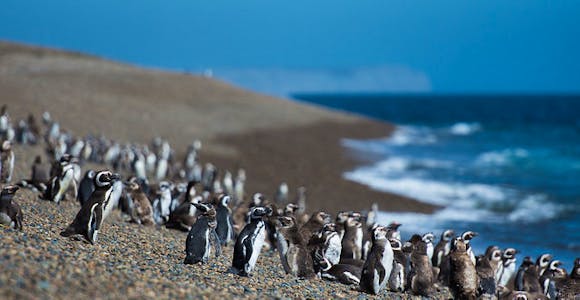
Peninsula Valdés offers some of the region's best wildlife watching, from southern right whales to sea lions and Magellanic penguins.
Discover More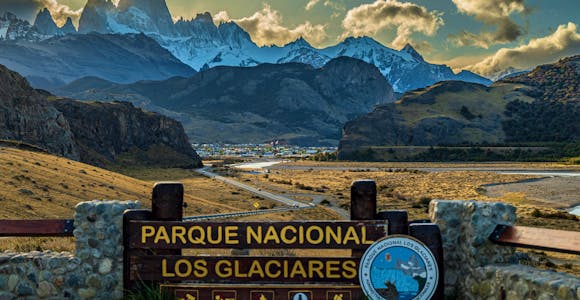
Los Glaciares is Argentina’s greatest national park. It’s home to Perito Moreno glacier and the Fitz Roy Massif, offering visitors explore epic ice and world-class hiking.
Discover More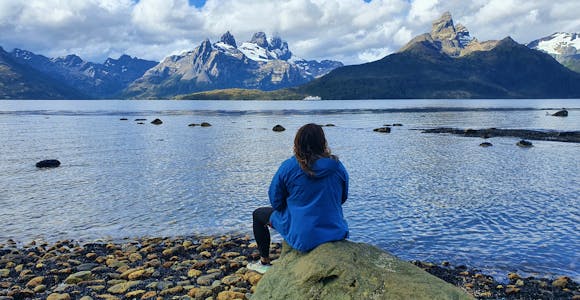
Tierra del Fuego is Patagonia’s southernmost outpost – a place of epic mountain hikes, thick forests, wild glaciers, and seeing penguin colonies as condors wheel high above.
Discover MoreWe'll spend some time listening to your aspirations, then discuss the kind of experience that might suit you.
Next we'll discuss the options, shortlist the best trips for you and present you our impartial recommendations.
We'll place a 24 hour hold on your preferred option - without obligation - whilst we talk through the details.