





Ventus Australis
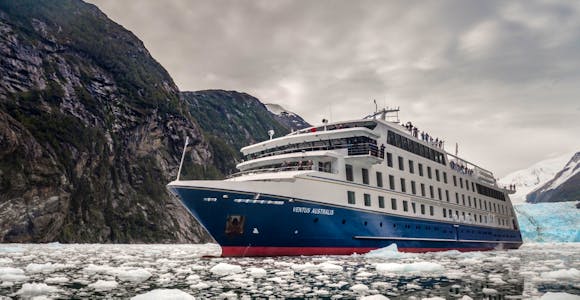
With a capacity of just 100 cabins, the modern Ventus Australis offers a comfortable and elegant way to experience the best in expedition cruising. Relax in her spacious lounges, …
Discover More
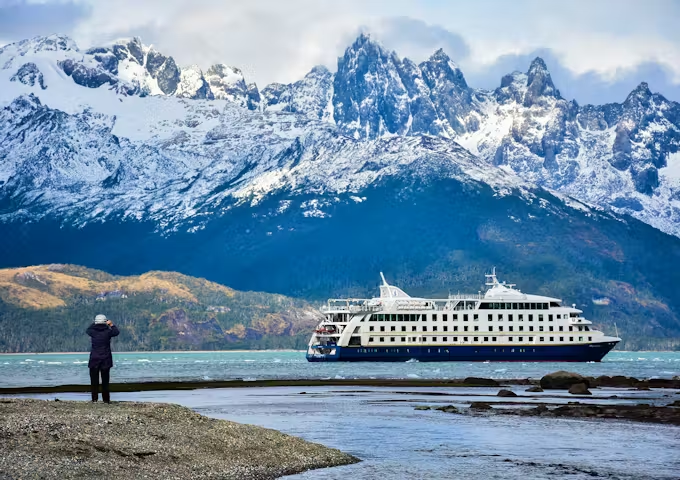
Cruising past the Cordillera Darwin mountains
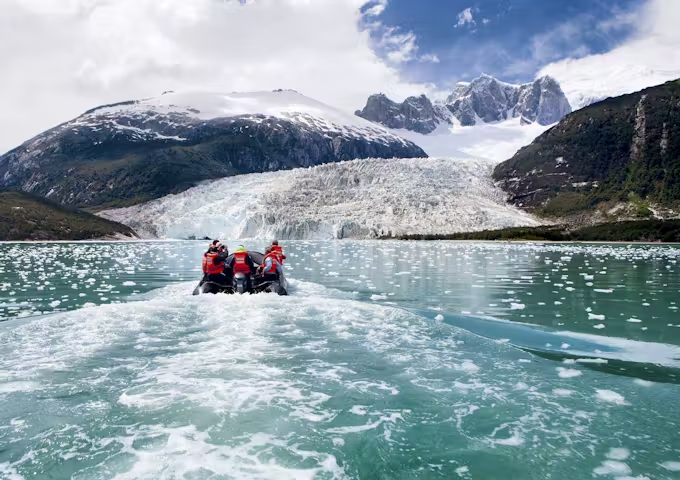
Glacier cruising in Tierra del Fuego
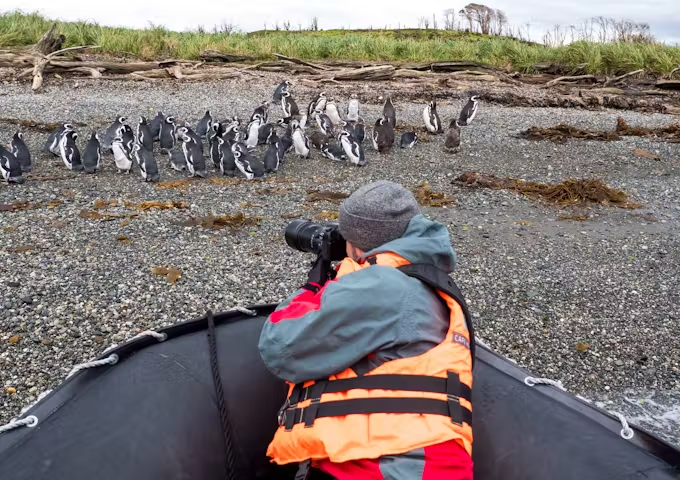
Magellanic penguins on the Tucker Islets
.JPG?auto=format,enhance,compress&fit=crop&crop=entropy,faces,focalpoint&w=680&h=480&q=40)
Playful dolphins in White Narrows

Glacier Cruise, Southern Patagonia

Dolphins in the waters of Tierra del Fuego
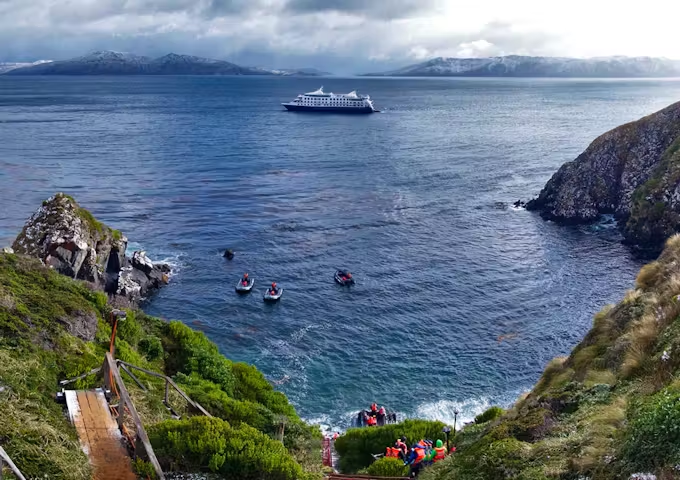
Zodiac landing at Cape Horn
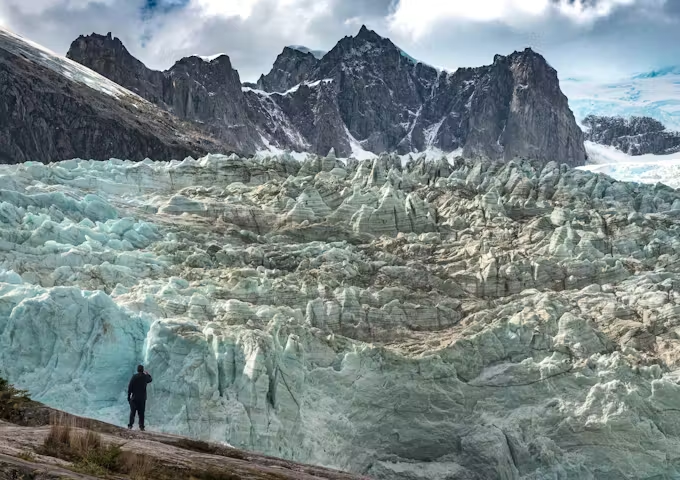
Glacier walk in Tierra del Fuego
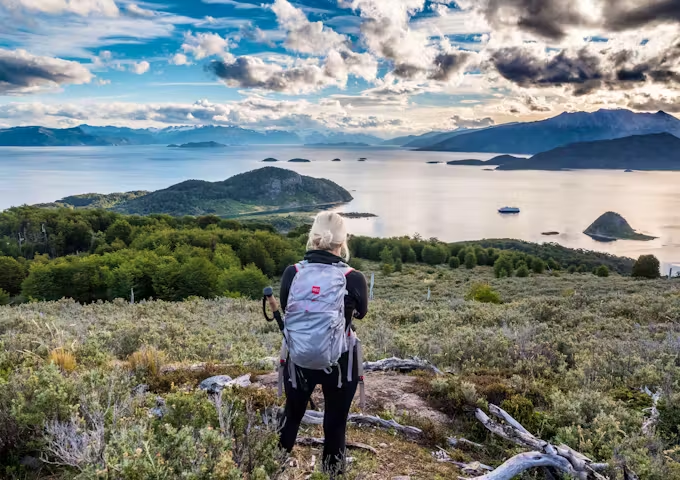
Looking over the Beagle Channel

Icebergs in the Northern Chilean Fjords
One of the most popular Patagonia cruises is exploring the island of Tierra del Fuego between Ushuaia and Punta Arenas or vice versa. The biggest attraction here is the chance to visit the legendary Cape Horn – a true marker of the end of the Earth
Vast glaciers are a major highlight of these cruises, including the breath-taking Pia Glacier and its icy lagoon. There are Zodiac cruise excursions among bobbing ice, or landings to hike through forests to dramatic viewpoints. Ship cruise through Glacier Alley and the Beagle Channel to follow the route of Charles Darwin's voyage of discovery,
Tierra del Fuego also offers plenty of wildlife watching, with colonies of Magellanic penguins, birdlife and sightings of dolphins, South American fur seals and Southern elephant seals.
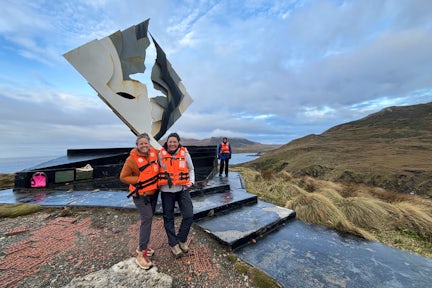
At the Cape Horn Monument
Cruising the Northern Fjords gives a brilliant mix of landscapes, culture and wildlife. The ship explores the last outposts of the Northern Patagonian Ice Field with the mind-bogglingly huge San Rafael Glacier, where leopard seals haul out ice floes in its chilly lagoon.
The glacier is a complete contrast to calls at Chiloé island, where you can hike through temperate rainforest, visit traditional fishing villages and historic wooden churches. On the mainland, remote landings include bathing in the thermal springs at Quitralco.
There is plenty of wildlife watching from dolphins, sea lions and Magellanic penguins on the coast, to hummingbirds in the forests. With luck, there's even a chance of seeing migrating blue whales in the Corcovado Gulf.
Northern Chilean Fjords cruises start and finish in Puerto Montt, close to Puerto Varas – the gateway to the Chilean Lake District.
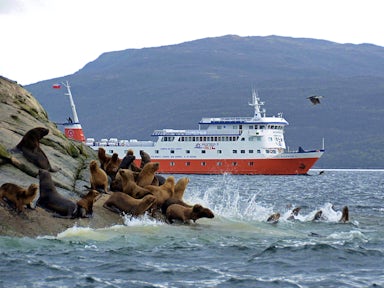
Sea lions in the Northern Chilean Fjords
The Southern Chilean Fjords present a dramatically craggier and icier landscape compared to their northern counterparts. Everyone is utterly captivated by the breathtaking spectacle of glaciers on display. Cruises navigating these fjords witness the awe-inspiring experience of glaciers calving, where colossal chunks of ice break off and plunge into the sea, forming magnificent icebergs.
These cruises provide daily opportunities for landings at secluded locations, nature hikes that bring you close enough to actually touch the icy faces of these ancient glaciers and you can keep an eye out for diverse wildlife, including elephant seals, playful dolphins, and albatrosses and other bird species.
Southern Chilean Fjords cruises start and finish in Puerto Natales, putting travellers in prime position to explore Torres del Paine.
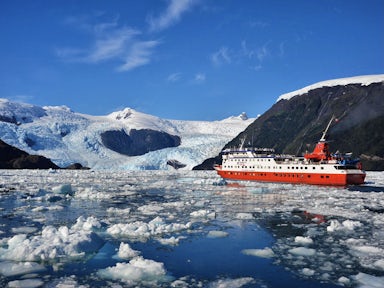
Icy waters in the Southern Chilean Fjords
One of the most exciting developments in recent years has seen Antarctic expedition cruise ships starting to operate in Patagonia. These state of the art polar vessels now bookend their Antarctic seasons with itineraries around the Chilean Fjords and Tierra Del Fuego – with some even extending the adventure to Antarctica itself.
Operated by some of our favourite Antarctic partners, including Antarctica21, Aurora, National Geographic-Lindblad, Quark and Silversea these trips offer the chance to discover Patagonia on some of the most luxurious vessels afloat. Every ship carries an expert team of guides, with daily expedition-style zodiac cruises to rarely visited glaciers to watch them calve, to discover isolated villages best accessible by sea, and step foot on islands that few have ever visited. Kayaking and paddleboarding may also be offered by some ships.

Cruising in front of Chile's Pio XI glacier
We cruised through the night to arrive at a new glacier each morning. From our boats we fished pieces of thousand-year-old ice from the water that was later served back to us in our evening drinks. Nothing tastes fresher!
Clo Mazille Patagonia Specialist
Patagonia Cruises & Vacations trips scored 4.5/5 from 735 reviews
We particularly appreciated Chloe's suggestion to add the Australis cruise - brilliant choice.
Travelled: March 2016
Heinrich -
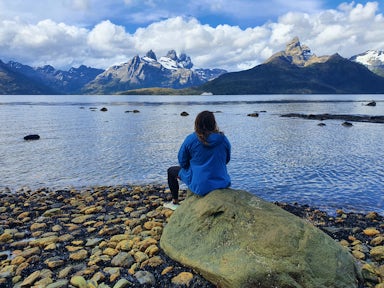
Beautiful Patagonia coastlines accessible only by ship
The majority of Patagonia cruise itineraries run for around five days/four nights, with the exception of the Northern Chilean Fjords route, which is six days/five nights on board. Expedition-style cruises on Antarctic ships can be longer – up to nine days/eight nights according to the ship and itinerary.
All meals, drinks and excursions are included in the price of the cruises; Antarctic ships may also offers extras such as spas.
Most guests on Cape Horn cruises and expedition-style cruises are international travellers, with English-speaking guides . Guests on the Fjords cruises are a mix of domestic and international tourists, giving a slice of Chilean culture along with the scenery. Guides may speak English as well as Spanish, but English audio translations during activities means you’ll never miss out.
Patagonia’s cruising season runs from the start of October through to the end of March. Departures are sometimes available at the end of September or beginning of April. If you plan to travel at this time (for example to take advantage of the fine autumn weather in Torres del Paine or Los Glaciares), it's important to note that some visits on itineraries may be unavailable at these dates. For example, if your heart is set on seeing Magellanic penguins, avoid these dates as they'll be at sea rather than in their colonies.
Patagonia cruises on Antarctic expedition cruise ships only operate at the very beginning and end of the Patagonia travel season – in September/ early October and late March/April. In between these months, they will be exploring Antarctica.

Adventure cruising around Tierra del Fuego
A number of purpose-built cruise ships operate in Patagonia – small enough to explore the fjords but with high quality service and plenty of space to offer a fine home for several nights at sea.
Sister ships Ventus Australis and Stella Australis sail in either direction between Ushuaia and Punta Arenas to Cape Horn and the Beagle Channel. Both carry a maximum of 210 passengers in five classes of cabin.
Skorpios II and Skorpios III operate in the Northern and Southern Chilean Fjords respectively. Skorpios II carries 106 passengers, while Skorpios III carries just 90 passengers.
Antarctic expedition cruise ships vary in size, from around 85-220 passengers. All offer a selection of cabins and suites, with balconies standard in many classes. At the luxury end, ships offer a choice of dining options and spa facilities.

Your floating home on a Patagonia cruise
With a capacity of just 100 cabins, the modern Ventus Australis offers a comfortable and elegant way to experience the best in expedition cruising. Relax in her spacious lounges, …
Discover More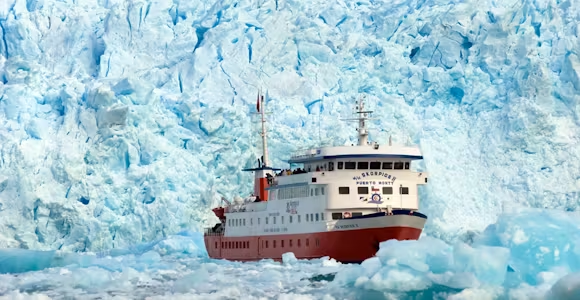
With a capacity of just over 100 passengers, this vessel offers both wonderful hospitality and a chance to take part in exciting shore-based landings.
Discover More
The Magellan Explorer is a purpose-built Polar expedition ship well suited for navigating Patagonia’s remote fjords and channels. Combining modern comfort with rugged capability,…
Discover More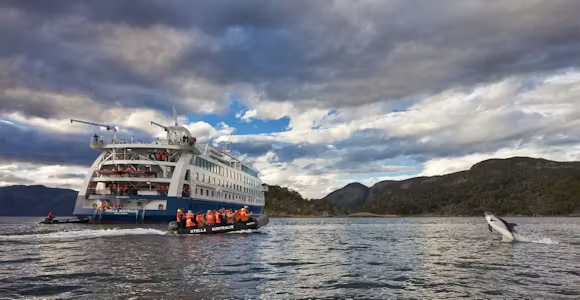
With a capacity of just 100 cabins, the modern Stella Australis offers a comfortable and elegant way to experience the best in expedition cruising. Relax in her spacious lounges, …
Discover More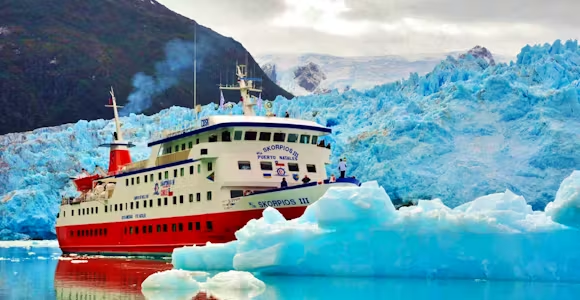
This vessel offers wonderful hospitality and a chance to both relax and partake in exciting shore-based landings.
Discover More
This stylish European-built ship was specifically designed for polar expeditions. It's packed full of unique features to enhance your cruising experience.
Discover More
The Douglas Mawson is a purpose-built polar expedition ship expertly engineered for navigating remote fjords and icy channels. Featuring the innovative Ulstein X-BOW® for enhanced…
Discover More
Ultra by name, ultra by nature. With elegant lines, onboard helicopters and the widest range of adventure activities, this ship is designed to impress.
Discover More
With luxury, comfort and exceptional service as the foundations of its onboard experience, Silver Endeavour is one of the most expensive expedition ships ever built.
Discover MoreCruises offer plenty of opportunities to build out your voyage as part of a larger Patagonia trip.
For those sailing to Cape Horn, there are plenty of remote treks to do in Tierra del Fuego, and from Ushuaia there are direct flights to El Calafate, the gateway to Los Glaciares National Park, as well as Buenos Aires. Swoop offers dedicated group tours that combine Cape Horn cruises with the best of Los Glaciares, including the famous Perito Moreno glacier
Punta Arenas and Puerto Natales are both perfect jumping-off points to explore Torres del Paine National Park. Both have flights to Santiago, Punta Arenas is also connected by air to Puerto Montt, the port for Northern Chilean Fjords cruises as well as the main airport to reach the Chilean Lake District. Coyhaique (Balmaceda) in Aysen also has flights to and from Punta Arenas.

Hiking in Los Glaciares National Park
These trips are often described as ‘cruises for people who don’t do cruises’. Based on a small ship carrying up to 210 passengers, they're the perfect way to explore some really remote areas, with plenty of opportunity to get off the ship and explore, or do cruises in small zodiac boats. They're more akin to an Antarctic expedition cruise to something you might find in the Caribbean or Mediterranean.
Many landings include the option to do a short hike to a viewpoint over a glacier or similar. The hikes usually include routes rated from easy to moderate, though even those rated for the most active guests can typically be done by anyone with a reasonable level of fitness. All excursions and hikes are optional.
Patagonia’s weather can famously encompass four seasons in a single day – a motto that Tierra del Fuego embraces with a passion.
Throughout the cruising season, temperatures average somewhere between 5–15C (41-49F). Strong winds are always a possibility, along with rain and even the occasional snow flurry. Zodiac landings require water-proof gear as you’ll be exposed to the elements, so it's wise to pack accordingly.
The changeable weather at Cape Horn has been famous for centuries, so there is always a small chance that conditions may prevent a landing. However, in recent seasons, over 80% of visits to the Horn had successful landings there.
Wildlife sightings can never be guaranteed but the cruise ships call at either the Tucker Islets or Magdalena Island, which are both home to large Magellanic penguin colonies. At the Tucker Islets (visited on the Ushuaia-Punta Arenas route, visits are made by zodiac. At Magdelana Island (visited on the Punta Arenas-Ushuaia route), it's possible to land and see the penguins from the shore.
Magellanic penguins come ashore between early October and late March to breed, coinciding with the operating season for the ships. The months outside this are spent at sea.
We'll spend some time listening to your aspirations, then discuss the kind of experience that might suit you.
Next we'll discuss the options, shortlist the best trips for you and present you our impartial recommendations.
We'll place a 24 hour hold on your preferred option - without obligation - whilst we talk through the details.
Check out our action-packed, 18-day, Luxury Patagonia Tour. Including the W Trek, Los Glaciares, tango, an adventure cruise, and more!