





Day hiking from El Chaltén
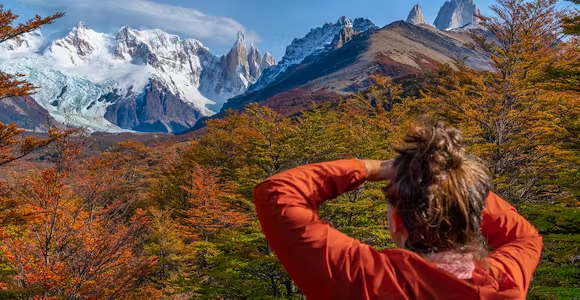
El Chaltén is the gateway to the Fitz Roy Massif in Los Glaciares – and some world class day hikes leading straight from your hotel to the mountains and glaciers.
Discover More
There are plenty of ways of experiencing the W Trek, and Swoop offers all of them. For those who looking for the most straightforward way of walking the W Trek however, we include the hike as part of our collection of escorted small group tours.
Our W trek departures have a maximum of 12 hikers for the best group dynamics, accompanied by an English-speaking Tour Leader. All other itineraries have a maximum of 16 travellers.
Options include our classic 6-day W Trek departure, and our 10-day Glaciers to Towers Active departure, which includes the W Trek as part of an itinerary including Los Glaciares National Park, with Perito Moreno Glacier and the Laguna de Los Tres hike around Mount FitzRoy.

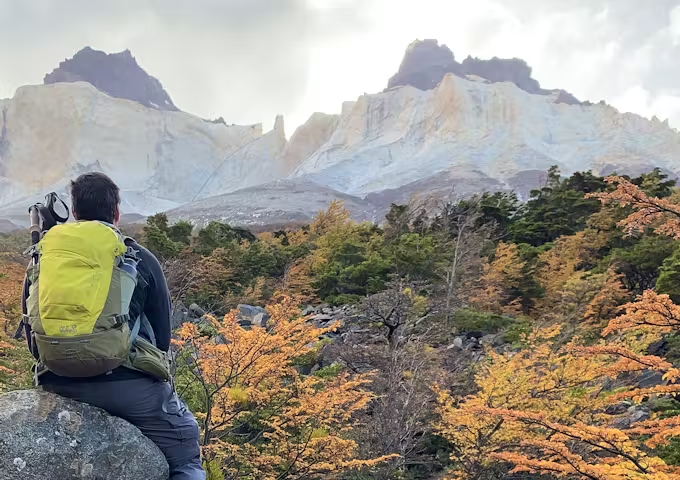
French Valley hike
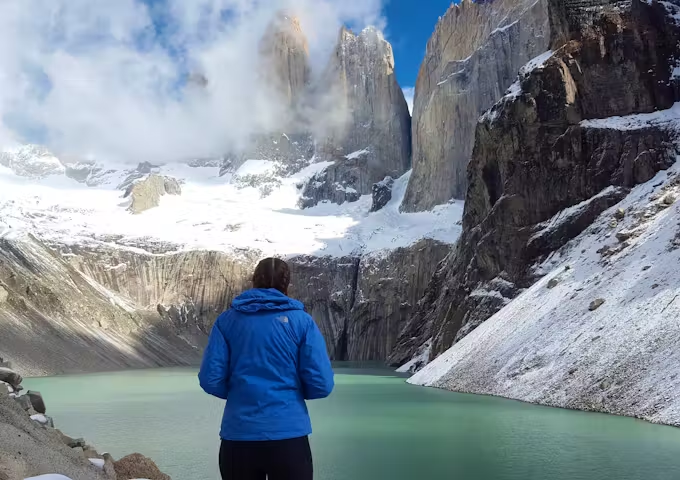
At the base of the Towers on the W Trek
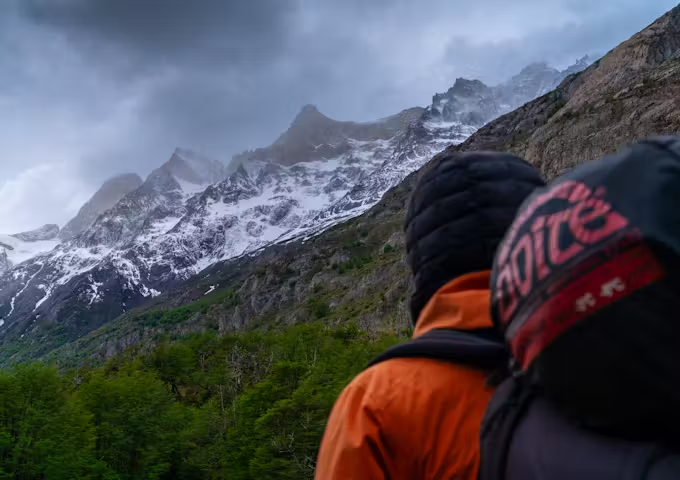
Trekking in Torres Del Paine
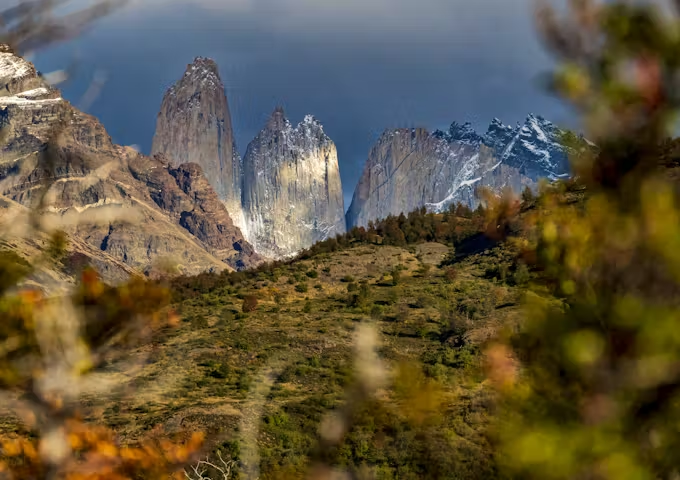
A view of the Towers
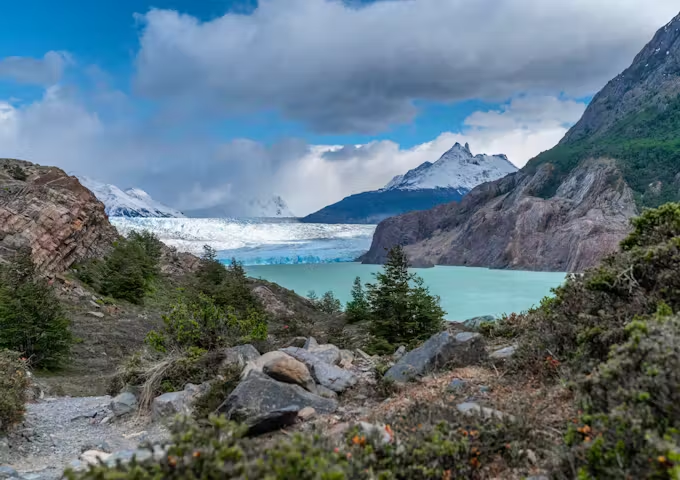
A view of Glacier Grey
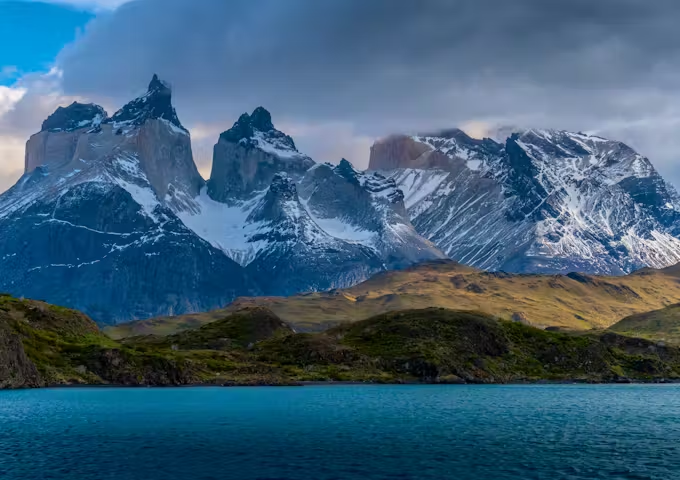
Taking it all in - Torres Del Paine
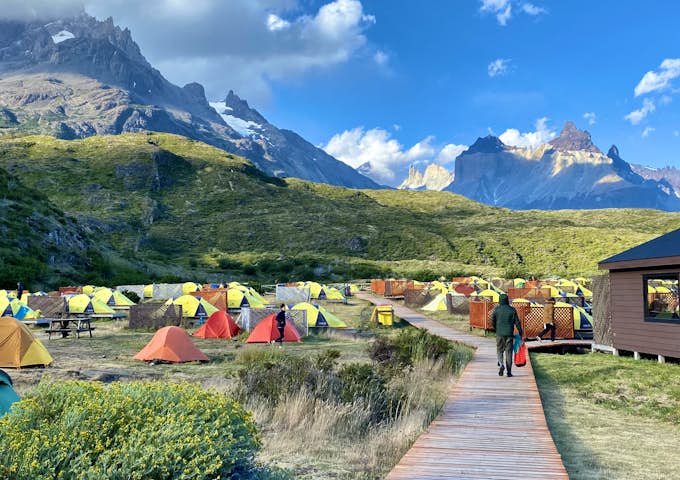
Camping at Paine Grande
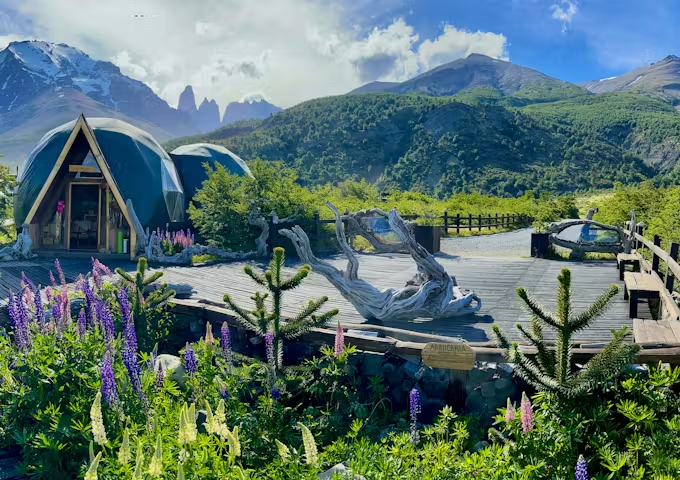
EcoCamp with view to the Towers
Hiking to the base of the Towers
French Valley hike
At Lago Grey
The W Trek can be hiked in either direction but is most usually walked east to west, starting with the Base of the Towers hike and ending at Refugio Paine Grande. This direction offers the best continuous views of Torres del Paine's iconic Cuernos peaks. The hike runs up three valleys, creating the classic W shape that gives it its name. Each of these valleys is home to one of Torres del Paine's classic views:
Within these core routes, the W Trek can be hiked in a variety of ways. It can be walked as a self-guided route, though it's more rewarding with a local guide, either walked solo or as part of a group (in winter, hiking in a group with a guide is compulsory). Extra add ons include boat trips and ice-hiking on Glacier Grey, or the W Trek can be combined with other adventure activities or folded into a longer and more challenging trek.
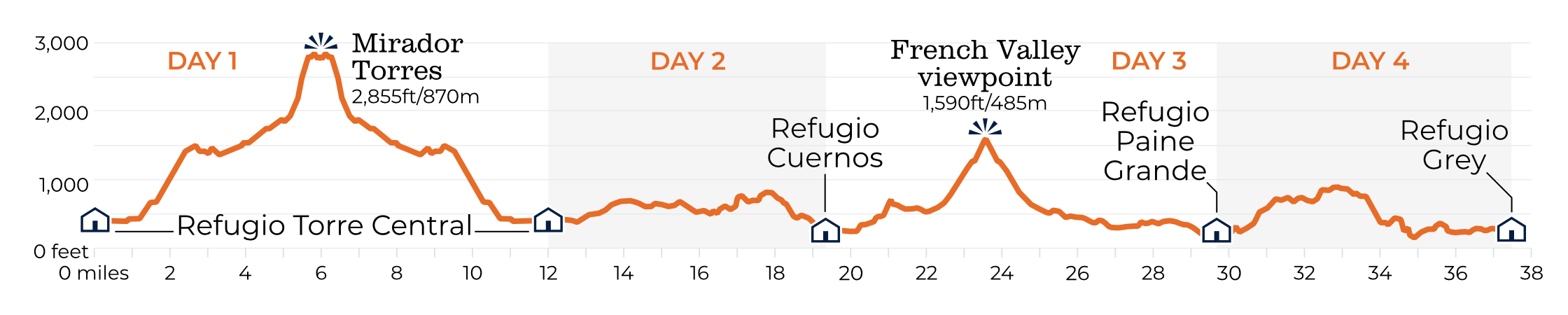
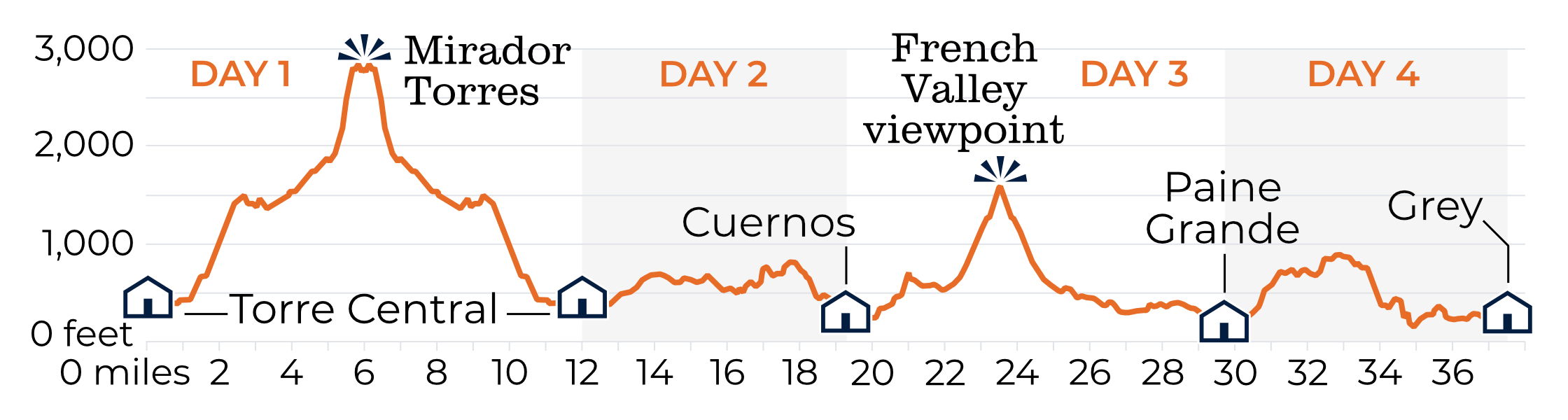
60km | 37.5 miles
4 days
Elevation gain: +7,045ft/2,147m
Elevation loss: -7,230ft/2,204m
The W Trek is typically hiked in 4–5 days, broken down as follows:

Signs pointing the way on the W Trek hike
In my five seasons working as a guide in Torres del Paine, I walked the W Trek over 60 times. No two days on its trails are ever alike – it’s like all of Patagonia condensed into a single trek.
Tomas Hernandez Patagonia Sales Consultant
The W Trek is aimed at those with a moderate to good level of physical fitness. If you are used to day hikes but have not done a multi-day trek before, the W Trek is an ideal introduction. It's not a walk in the park (and you need to be ready for Patagonia's unpredictable weather), but most reasonably fit adults complete it, as long as their ready to respect the challenge.
The nature of the W Trek – walking between refugios or campsites – means that you will not need to carry the heavy rucksack full of camping gear needed for remote treks. You'll need to be capable of walking around 12 miles (19 km) a day over a number of days.
The walking is not technical, but there are steep climbs to the Mirador Torres and French Valley viewpoints. The first day of the hike involves an ascent of around 3000 feet (900 m).
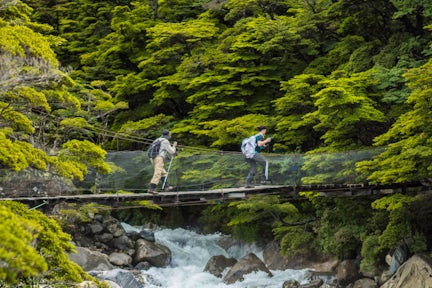
Bridge crossing in French Valley
One attraction of hiking the W Trek is the minimal gear needed, as you will either walk between refugios or campsites with pre-erected tents, or be transferred from your private accommodation each day to the trailhead.
Whatever the month or the weather, dress for four seasons in a single day, with a windproof/ waterproof jacket and warm layers including a warm hat, neck gaiter (buff) and windproof gloves.
A 35-40 litre backpack for your personal belongings is normally sufficient, as bedding is provided at refugios, and sleeping bags and mats at campsites. Trekking poles are strongly recommended.
You can rent gear (including waterproofs and trekking poles) in Puerto Natales.
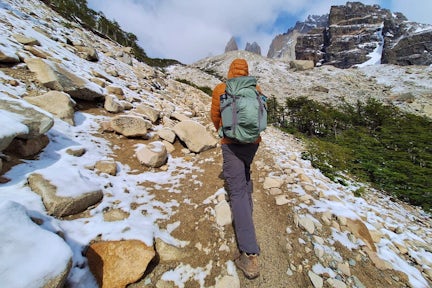
The Base of the Towers ascent
Camping is available for all of the nights on the route of the W Trek. Campsites are attached to refugios, allowing hikers to use their facilities while enjoying the privacy of their own tent.
Refugio campsites have pre-erected tents, so you don’t have to carry one on the trail. Insulated sleeping mats and warm sleeping bags can also be booked in advance.
Wild camping is not permitted anywhere in Torres del Paine, including along the route of the W Trek.
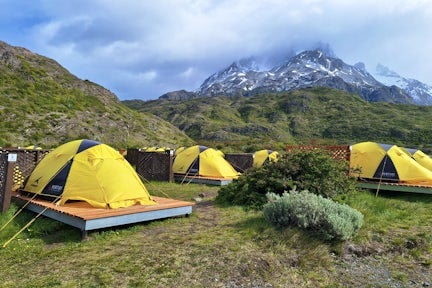
A campsite on the W Trek
The route of the W Trek is dotted with refugios: mountain huts acting as hostels for hikers. They're a classic way of experiencing the trek.
Refugios offer dorm rooms sleeping six to eight people, and showers with (mostly) hot water. Food is included, with simple restaurants and box lunches for the day.
There are refugios at all major stops on the W trek; most are open year-round. Their communal nature gives them a highly sociable atmosphere for hikers.
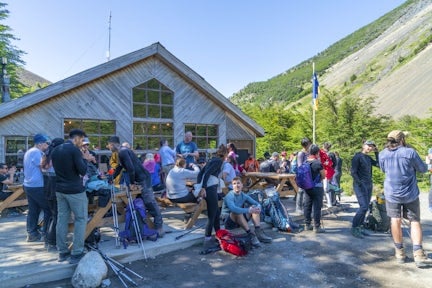
A busy refugio on the W Trek
Torres del Paine is home to three superb glamping sites from which to explore the W Trek. From your eco-dome, yurt or bell tent, you set out with a vehicle transfer to the trailhead each day, before returning to your cosy private lodgings at the end of the day.
If you want to experience the classic W Trek by staying in refugios, these eco-lodges also make excellent quiet retreats to settle into at the end of your trek, enjoying their comfort, gastronomy and service along with a host of other excursions.
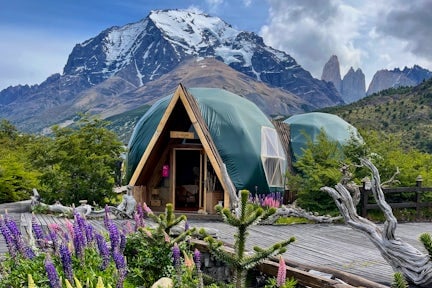
EcoCamp
For those who want the highlights of the W Trek but prefer to sleep in stylish comfort, Torres del Paine has some of Patagonia’s best luxury lodges.
You'll choose your day hike the night before, take a private guide and vehicle to the trailhead, then return to pamper yourself in a spa, a gourmet meal or just a cocktail and a world-beating view.
With a menu of daily excursions, luxury lodges offer the ultimate flexible experience for the W Trek and Torres del Paine.
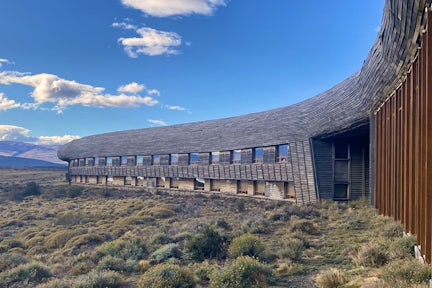
Tierra Patagonia
It’s possible to hike the W Trek with or without a guide but trekkers often tell us that their guide greatly enhanced their time on the trail.
The W Trek is well marked and has plenty of hikers on it so Torres del Paine’s guides aren't necessary for navigation – instead they will be able to share with you their deep knowledge of the park’s wildlife and history. They’re experts at reading the unpredictable weather, as well as making sure your hike is well-paced to enjoy the best spots for lunch, rest stops and views.
Crucially, guides are also expert in navigating the refugio system and ensuring their groups are at the front of the queue for food and hot showers. First time hikers often underestimate just how busy refugios can be, and having someone on your side will give you a significantly better experience here.
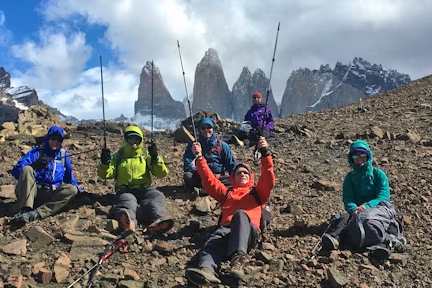
Hikers in a guided group
The refugios and campsites that enable the classic 4-5 day W Trek open up in mid-September and close in mid-April.
In terms of weather, December and January have long sunlight hours, warmer temperatures but also the wildest winds. This is peak season and it can be hard to get a space in a refugio, so book at least 6 months in advance. You can expect as many as 1000 people on the trail to the Towers viewpoint in one day, so don't expect an untouched wilderness.
To get the views all to yourself, you can hike the W Trek with a guide between May and August. Torres del Paine in winter can be a real treat as the park is almost completely empty.
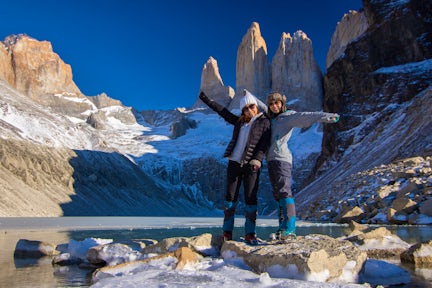
Winter hike to the Towers
The W Trek is rightfully popular, but that means but it can be very busy in peak season – especially around Christmas. If you're looking for a quieter experience, we recommend the shoulder season or even winter – or heading for some of Patagonia's other great (and less crowded) trekking spots.
Puerto Natales is the gateway town for the W Trek in Torres del Paine. It has direct flights from Santiago, which take around 3½ hours. It's also possible to fly from Santiago to Punta Arenas (also about 3½ hours), but you'll need to transfer by bus to Puerto Natales (3 hours) to get to Torres del Paine.
From Puerto Natales, public buses travel via Cerro Castillo village to the park entrance at Laguna Amarga (2 hours) before continuing to Pudeto Dock.
For the eastern trailhead of the W Trek, shuttle buses connect Laguna Amarga with Refugio Torre Central (30 minutes).
For the western trailhead, a catamaran connects Paine Grande Refugio with Pudeto Dock (30 minutes), with its connections to Puerto Natales.
Quick and comfortable private/group transfers allow you to take a boat to spectacular Glacier Grey and finish your trek on the beach, before returning you to civilisation.
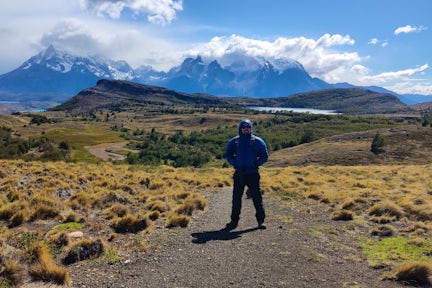
On the trail to the Paine Massif
The W Trek in Torres Del Paine trips scored 4.4/5 from 1640 reviews
The trip was incredible! We lucked out on the weather. On our first day, the Towers were gorgeous and getting to visit the Britanico Valley was spectacular, despite being long, somewhat difficult days of hiking. The picturesque views on day two could not be beat, especially coming into Los Cuernos. We really loved the experience with our group, both the other people and our guide. Read the full review
Travelled: November 2018
Lauren Harris - United States Of America
The W Trek in winter is an experience like no other. The park is so empty it's just you and the mountains – and the crunch of snow under your hiking boots.
Lauren Valenzuela Patagonia Sales Consultant
The O Circuit (also known as the Full Circuit) extends the W Trek by almost doubling its length and extending the route into the more remote northern sector of Torres del Paine, staying in secluded campsites.
It's a considerably more challenging hike than the W Trek, not least because of the tough ascent of the John Gardner Pass, followed by a series of spectacular hanging bridges and the reward of the long beautiful hike above Grey Glacier.
For those with the fitness, stamina and time, the O Circuit is one the most rewarding multi-day hikes in Patagonia. For those who want a more moderate hike, or want to hike out from more comfortable accommodation options, the W Trek still offers the classic Torres del Paine experience.

Hiking to Glacier Grey
Cerro Castillo National Park
Autumn colours in Los Glaciares National Park
Early snow in Tierra del Fuego
The W Trek is Patagonia's most famous hiking route by some distance – and for good reason. This does mean however that it can get very busy, and the high footfall is eroding the trails. If you're looking for a quieter experience, or would like to reduce your impact on the land, then here are some alternatives for hiking in Patagonia:
The W Trek combines well with hikes in the nearby Los Glaciares National Park, Argentina.
Tap into 400,000 hours of lived experience in Patagonia and allow Swoop to tailor-make your adventure. From a world of options, we'll help you discover your perfect trip.
The W Trek is in Torres Del Paine National Park, on the Chilean side of Patagonia. It is the park's most famous hiking route: a four or five day hike that can be walked without carrying gear or food, between refugios or campsites, with spectacular views of the granite towers that gave the park its name.
The W Trek is a moderately difficult hike lasting around four to five days, covering 46 miles (75 km) on mainly gentle terrain, with more challenging days involving climbs of up to 3000 feet (900 m).
You need to be in good shape, with some experience of multi-day hiking and prepared for extremely variable weather. The longest days are six to eight hours of hiking, which allows for plenty of snack and photo breaks, both of which you'll definitely want to take.
More experienced trekkers can include the W as part of the Full Circuit, or dip in and out during some of our off the beaten track trips into Paine's hidden valleys and mountain passes.
You can also break the W Trek into a series of day hikes, enjoying it in more comfort at luxury lodges or glamping sites around the park.
Please get in touch if you'd like to talk to us about how the hike might compare to others that you've done before.
Yes.
While the W Trek is the reason most people come to Torres de Paine, it's easy to add an extra activity to your itinerary. Take a look at multi-activity adventure trip options, including mountain bike trails, horseback treks or kayaking among the icebergs of Lago Grey and Rio Serrano.
Every year we help dozens of solo travellers find a hiking group in Torres del Paine. We have scheduled group trips with fixed departure dates organised by our local operators, but we also put like-minded hikers together to create more flexible itineraries.
Let us know when you're going and we'll happily find a trek or a group to suit you.
Yes, it is possible to walk the W Trek unguided, which is an option if you're on a tight budget and have sufficient hiking experience, but a guide can really add to your trip.
While safety and navigation are an important part of what a guide offers, our customers always talk about the knowledge of wildlife, history, geography and culture that their guides brought to the trek. If you do want to hike alone, we can organise a self-guided hike with all the logistics and transport taken care of and there's also the option to combine an unguided W Trek with some guided hiking off-the-beaten-track.
Refugios are the youth hostels of the trails, with dorm rooms, bars, basic restaurants and showers and (most of the time) hot water. There are refugios at all the major stops on the trek, most of which are open year round. They are fun and friendly places, even if the service can be a little disappointing now and again.
Camping gives you a slightly wilder experience of the trek and it doesn't necessarily mean carrying all your gear. You can of course bring your own tent, or rent everything you need in Puerto Natales, but it's also possible to hire tents at each of the campsites as you go. Do bear in mind that the Patagonia experience very high winds, especially in summer – it won't do you any harm, but you might need earplugs to sleep.
The only toilets are at the refugios and campsites so you need to be prepared to go for wild toilet stops.
Yes. You can complete a multi-day W Trek and then reward yourself with a few days soaking in the spa, enjoying some world-class gastronomy and perhaps exploring some different trails on foot, van or horse during the day at a Luxury Lodge.
If camping or dorm rooms are really not your thing then you can still see the highlights of the W Trek, taking three separate day excursions to the towers viewpoint in the Ascencio Valley, the French Valley and Glacier Grey.
The beauty of staying in a Luxury Yurt or Lodge is that you can choose the night before which excursion you will do the following day when you will have a weather forecast available and can see how you feel.
With one exception - the cabins at the Los Cuernos - the refugios do not have private rooms.
If you want to spend every night in a private room, consider splitting the W Trek into day hikes, where your transport between hotels will be arranged.
The end of December and early January are the busiest times in the park. Places in refugios get booked up by the end of September, flights arriving at this time can be more expensive if you leave it late and there will be more people on the trails.
If you book well in advance then the trek is still a great experience, but it is definitely worth considering the shoulder months or the low season if your schedule is flexible. Alternatively, avoid the busier trails and experience the off-the-beaten-track treks in the wilder areas of the park.
The park is a very different place in winter, which is from April/May to August/September. There are far fewer visitors and the wind is calmer, but the days are shorter, transport and accommodation options are limited.
The W Trek remains open for guided groups only, with a good chance that you'll be trekking through snow with the park almost entirely to yourself. We love it!
We've worked with our local partners to design special itineraries that get you to the highlights of the W Trek in spite of the above restrictions. Guided treks are few and far between in winter, so please get in touch to see what's available, or read more about visiting Torres del Paine in winter.
While the W Trek visits each of the park's main highlights in 4-5 days, the O Circuit Trek is for more experienced hikers aiming to get a little more remote and spend 7-9 days trekking. You'll still see the main sights, but will then loop around the northern side of the park where you'll have views of the Southern Patagonian Ice Field and the Grey Glacier.
It is undoubtedly more challenging and you'll need to be prepared to camp, but the sights are spectacular.
El Chaltén is the gateway to the Fitz Roy Massif in Los Glaciares – and some world class day hikes leading straight from your hotel to the mountains and glaciers.
Discover More
Cerro Castillo offers the best hiking in the whole of Aysen. Trek among the peaks, ride like a gaucho, and seek the bright turquoise lagoons hidden deep in the mountains.
Discover More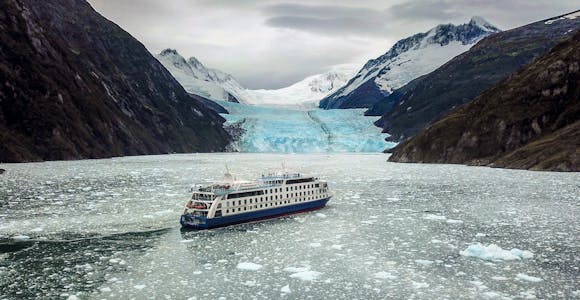
Get to parts of Patagonia that even the toughest hikers can't reach. Adventure cruises take you to the glaciers of the Chilean Fjords and Cape Horn off Tierra del Fuego.
Discover More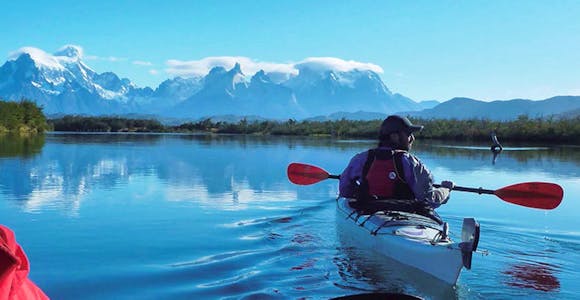
Torres del Paine's secluded waterways are perfect for paddling through. The many lagoons, rivers and glacier-fronted lakes offer something for all kayaking abilities.
Discover MoreCheck out our Swoop Group tours, with their unique itineraries that showcase the best of Patagonia, from the heart of Torres del Paine to Los Glaciares.